Key Takeaways for Steel Pipe Manufacturers
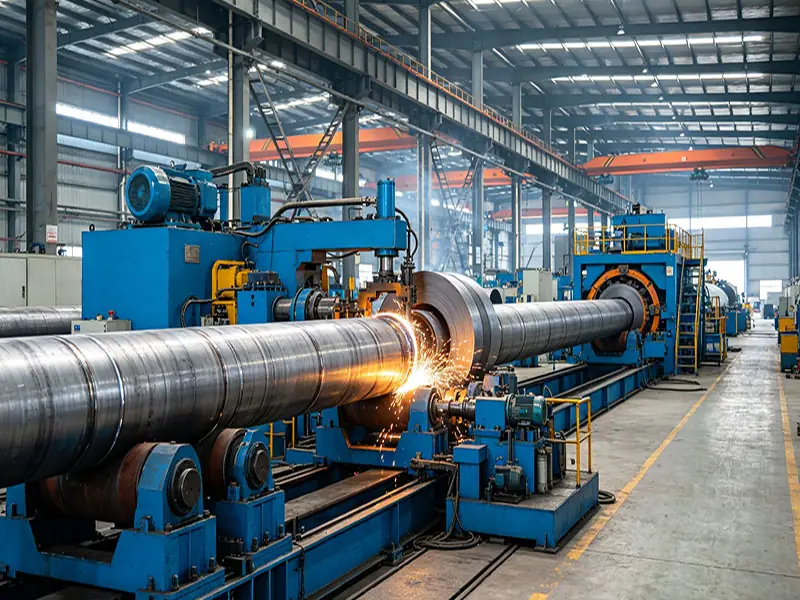
ERW pipe welding line The systems are designed for manufacturers who require high-speed production, precise sizing and efficient production of small to medium diameter steel pipes.
SSAW pipe welding line The systems are more suitable for large diameter pipe production where diameter flexibility, harsh operating conditions and infrastructure projects are a priority.
There is no one-size-fits-all answer when choosing pipe production lines; this depends on product characteristics, target market, production capacity, budget and applicable standards.
A complete solution for pipe production does not have to be limited to forming and welding equipment. Control, precision machining and long-term production support are equally necessary.
Introduction
For steel pipe manufacturers, investing in a production line is a long-term decision that directly impacts product range, production efficiency and market competitiveness. Two technologies widely used in the welded pipe industry are ERW (electric resistance welding) and SSAW (spiral submerged arc welding).
Although both technologies produce welded steel pipes, the manufacturing principles are different. AnERW pipe welding line uses high frequency resistance welding to create straight seam pipes, whileSSAW pipe welding line Forms steel strips into a spiral shape and uses submerged arc welding to weld pipes.
Understanding these differences helps manufacturers select equipment that suits their business goals, whether they are focusing on construction pipes, utility piping, oil and gas transportation, or large-scale infrastructure projects.
ERW and SSAW Pipe Welding Line: Understanding the Key Technological Differences
How ERW pipe welding lines produce straight seam welded pipes
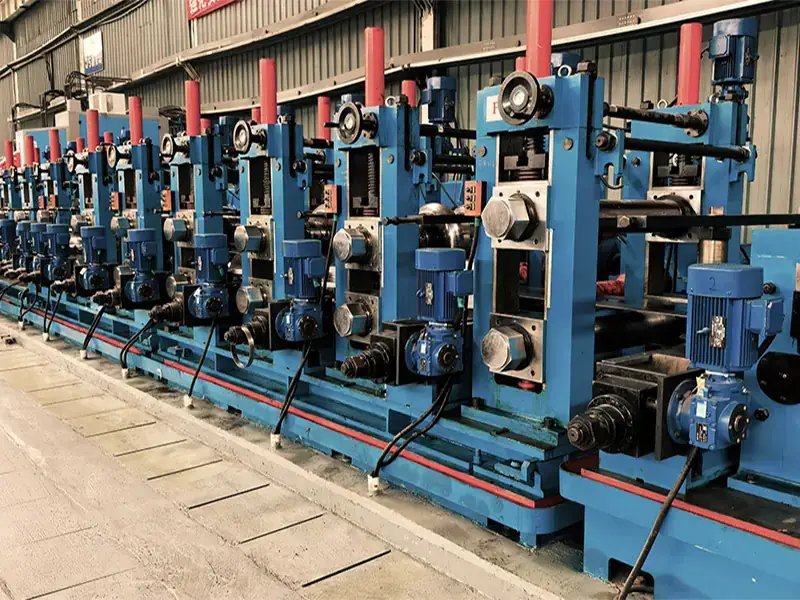
AnERW pipe welding line produces pipes by gradually shaping steel strip into a round shape using several rolling stands and joining the edges by high-frequency electric welding.
During the welding process, high frequency current heats the edges of the strip to a plastic state, and pressure rolls apply pressure to complete the weld without adding filler material. This process creates a narrow weld with a relatively small heat-affected zone.
Key features include:
- High production speed, typically from 6–150 m/min depending on equipment configuration.
- Suitable for the production of round, square and rectangular pipes.
- Effective for continuous production with constant dimensions.
How SSAW pipe welding lines produce spiral welded pipes
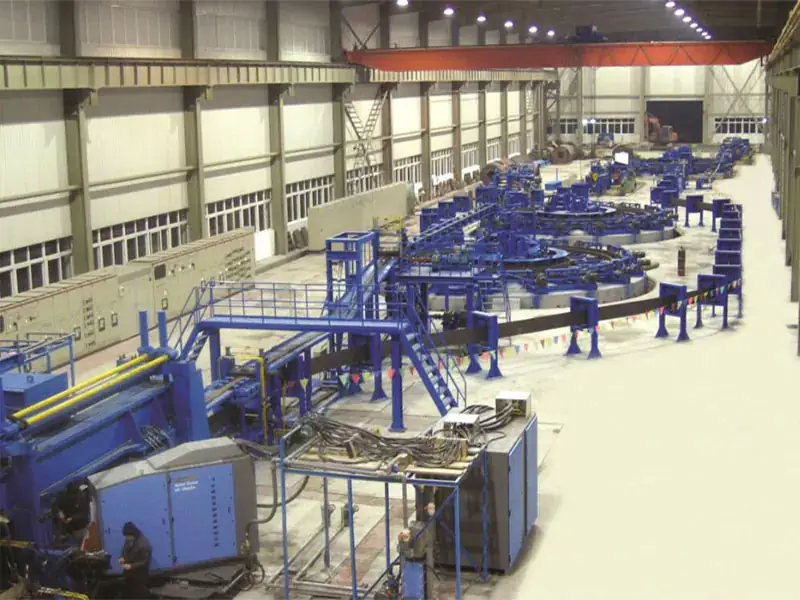
Apipe welding line for the production of spiral welded pipes produces pipes by feeding steel strips at a controlled angle and forming them into a continuous spiral structure. Internal and external welds are formed using the submerged arc welding method, in which the flux protects the welding area from atmospheric contaminants.
The SSAW process offers advantages when producing large-diameter pipes because manufacturers can adjust the forming angle to produce pipes of different diameters from strips of the same width.
Typical SSAW characteristics include:
- Double-sided submerged arc welding for strong weld penetration.
- Possibility of producing large diameter products.
- Flexible manufacturing for various infrastructure applications.
In practice, manufacturers typically select welded pipe technologies based on pipe diameter requirements, application conditions, and production goals.
ERW vs SSAW: Technical Comparison
| Parameter | ERW pipe welding line | SSAW pipe welding line |
| Welding method | High frequency resistance welding | Double-sided submerged arc welding. |
| Pipe structure | Straight seam welded pipe | Spiral welded pipe |
| Diameter range | φ10–φ660 mm | φ219–φ3,500 mm |
| Wall thickness | 0.5–25.4 mm | 3–25.4 mm |
| Production speed | 6–150 m/min | 0.5–2.0 m/min |
| Typical Applications | Construction, mechanical pipes, utilities | Oil and gas, water transportation, piles |
Production capabilities: Which pipe welding line is right for your business?
Diameter range and product flexibility
The main difference between the two technologies is production flexibility.
ERW equipment is generally preferred when manufacturers require large quantities of standardized pipe. Because the forming process uses precision rolling stands, it provides excellent dimensional accuracy for repeated production.
On the contrary,SSAW pipe welding line provides greater flexibility for large diameter products. By adjusting molding parameters, manufacturers can produce pipes of different diameters while maintaining efficient use of material.
The main advantage of SSAW technology is that one production line can handle multiple specifications. This means more flexible capacity planning for infrastructure, water and energy pipeline companies.
Production speed and material processing capabilities
Production speed is another important factor when evaluating a pipe welding line investment.
ERW systems offer higher line speeds, making them suitable for high volume orders where production efficiency is critical. They can process materials such as carbon and low alloy steel, including structural and general industrial pipes.
SSAW systems operate at lower welding speeds but provide benefits for large diameter applications. Wanxin SSAW lines can process steel grades including Q235B, Q355B and API 5L to X70 depending on configuration.
Quality control and international standards
Modern pipe production requires more than just forming and welding. Quality control systems play an important role in ensuring product reliability.
ERW and SSAW production lines can be equipped with inspection equipment such as:
- Online ultrasonic inspection of welds.
- Hydrostatic tests to check pressure.
- X-ray inspection systems for SSAW production requirements.
- Autonomous inspection systems for inspecting finished pipes.
Quality management systems based on ISO 9001 principles help manufacturers maintain stable production processes and product quality.
B2B Buying Guide: Cost, Installation and Long-Term ROI
Investments in equipment and operational issues
When comparing pipe processing equipment, equipment price is only one aspect. Production capacity, tooling requirements, maintenance costs and the product's target market all impact long-term profitability.
ERW systems typically require more precise tooling because pipe sizes are highly dependent on the accuracy of the profiling. However, their higher production speed can lead to faster production of standard products.
SSAW systems provide investment advantages when manufacturers need to produce large diameter products without purchasing multiple dedicated lines. Their flexibility allows plants to meet different project requirements.
Factory Layout and Installation Requirements
Before purchasing a pipe production line, manufacturers should evaluate:
- There are production areas and production layout.
- Power requirements.
- Foundation design for heavy equipment.
- Material handling capabilities including cranes and roll storage warehouses.
Choosing between SSAW and ERW pipe welding lines
When ERW pipe welding lines are the best choice
Manufacturers may consider using ERW technology if their primary products include:
- Pipes of small and medium diameter.
- Large volume construction and mechanical pipes.
- Products requiring strict dimensional accuracy.
- Hollow profiles of round, square and rectangular sections.

When SSAW Pipe Welding Lines Are the Best Choice
Manufacturers often choose SSAW technology for:
- Large diameter pipelines.
- Water supply projects.
- Oil and gas transportation systems.
- Construction of foundation and piles.

Correctly configuredSSAW pipe welding line can provide production flexibility for projects requiring different pipe diameters and capacities in harsh environments.
Why choose Wanxin Machinery as your pipe welding line supplier?
Choosing the right equipment supplier is just as important as choosing the right pipe welding line technology. A reliable supplier should provide not only complete production equipment, but also technical support at all stages of planning, installation and operation of the project.
Wanxin Machinery specializes in the development and production of welded pipe solutions, includingERW pipe welding line andSSAW pipe welding line systems. The company specializes in customized equipment configurations based on customer product requirements, target production capacity and plant conditions.
Key benefits include:
- Customized production solutions: Wanxin designs pipe welding line configurations according to pipe diameter ranges, material requirements, productivity targets and available production space, rather than offering only standard models.
- Advanced molding technology: ERW pipe welding linesuse flexible forming technology to improve material flow and production stability, and SSAW lines use three-roll spiral forming systems to maintain consistent tube roundness and weld quality.
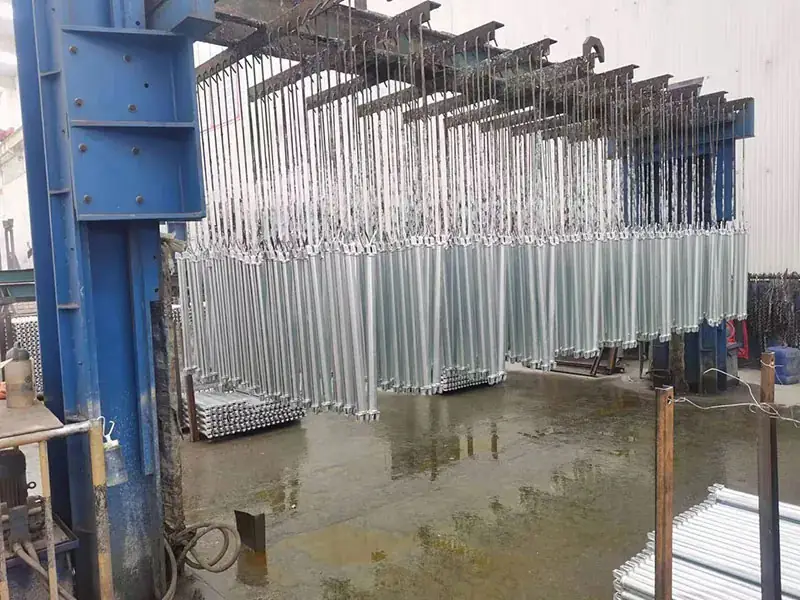
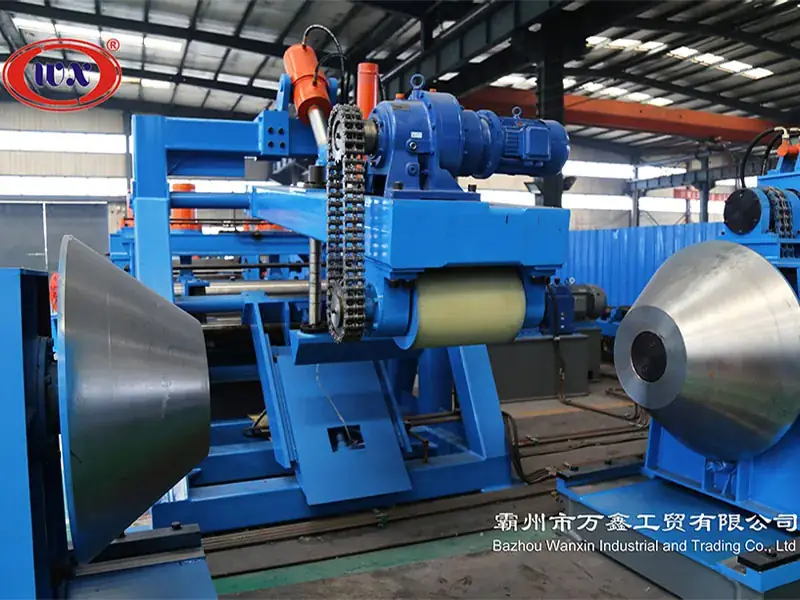
- Full production line integration: Solutions can include forming, welding, sizing, cutting and inspection systems to help manufacturers establish efficient production processes.
- Technical support and commissioning: Wanxin provides installation guidance, equipment commissioning support and technical assistance to help customers achieve stable operation after delivery.
For manufacturers investing in a new steel pipe production facility, working with an experienced pipe welding line supplier can reduce project risks and ensure the production line meets long-term market requirements.
Frequently asked questions about SSAW and ERW pipe welding lines
question1: What is the main difference between ERW and SSAW pipes?
A: Key differences include:
- Welding method: ERW uses high frequency resistance welding and SSAW uses submerged arc welding with welding wire and flux.
- Weld seam structure: ERW produces straight seam pipes and SSAW produces spiral seam pipes.
- Product range: ERW is generally used for smaller diameter pipes, while SSAW is suitable for larger diameter pipes.
- Production speed: ERW generally provides faster production speed, while SSAW provides greater flexibility in diameter selection.
question2: Which pipe welding line is best for my business?
A: It depends on your target market. ERW is suitable for manufacturers specializing in high volumes of small and medium diameter pipe, while SSAW is better suited for companies producing large diameter pipe for oil, gas, water and infrastructure projects.
question3: How long does it take to install a pipe welding line?
A: Installation time depends on the equipment model and the complexity of the production line. Wanxin provides installation guidance, commissioning support and operator training to help customers start production efficiently.
question4Q: Can ERW pipe welding lines produce square and rectangular pipes?
A: Yes. Wanxin ERW pipe welding lines can be customized to produce round pipes as well as square and rectangular hollow sections through additional forming and sizing processes.
Conclusion
Choice betweenERW pipe welding line andSSAW pipe welding line should be based on the type of pipe you plan to produce, your target customers and expected production volume.
ERW pipe welding lines are a practical choice for standard size pipe manufacturers who require high efficiency, dimensional consistency and stable performance. SSAW mills are better suited for large diameter pipe production, where production flexibility and the ability to meet varying project requirements are more important.
By assessing product demand, technical requirements and long-term operating costs, manufacturers can select a pipe welding line solution that will support sustainable production growth.
For manufacturers planning to build a new steel pipe manufacturing facility, choosing the right technology and supplier can improve production efficiency and create long-term business value. Wanxin Machinery provides customized pipe welding line solutions based on different production purposes and market requirements.Contact us for a customized pipe welding line solution according to your production needs.