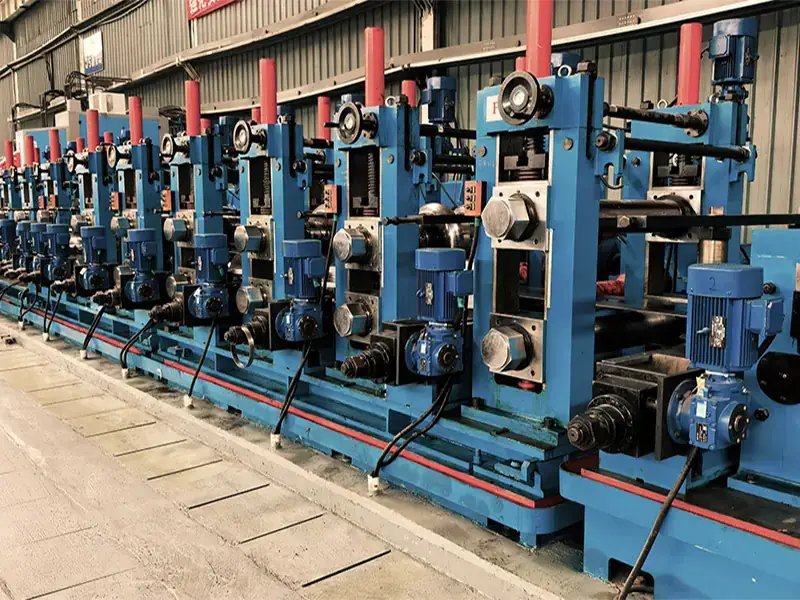
Many steel pipe manufacturers face the same dilemma when expanding production capacity: should they invest in ERW114, ERW165 or ERW219 pipe welding line? How much actual power output do they really need? Is a flexible molding system worth the extra investment?
Selecting the wrong mill will result in low capacity utilization, long downtime during size changes and unnecessary operating costs. On the contrary, properly tunedERW pipe welding linecan radically improve production efficiency and reduce the payback period of investments.
This guide details how to evaluate technical specifications, production capacity, molding technology, quality control systems, and ROI.ERW pipe welding lines, helping shoppers make informed purchasing decisions.
What is an ERW pipe welding line and how does it work?
Before delving into the selection criteria, it is important to clarify what isERW pipe welding lineand how its core technology affects the quality of the finished pipes.
Main production line: From steel coil to finished pipe
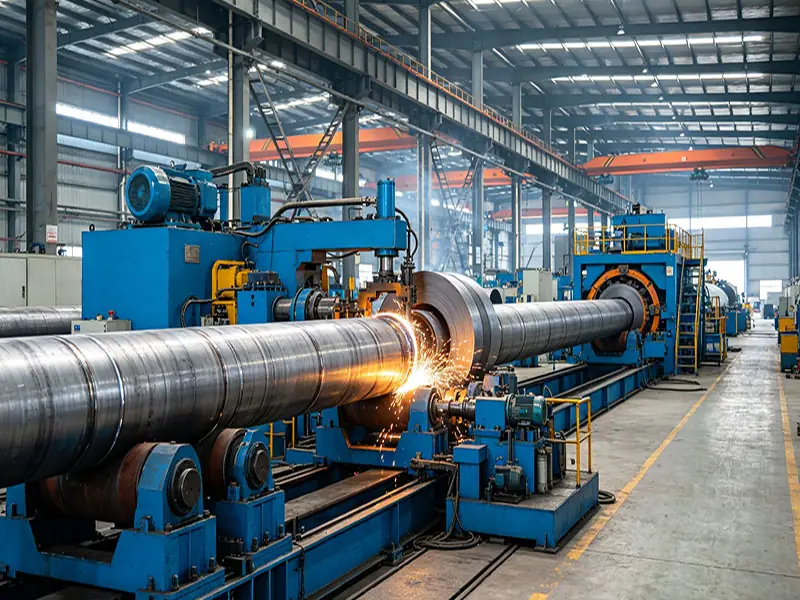
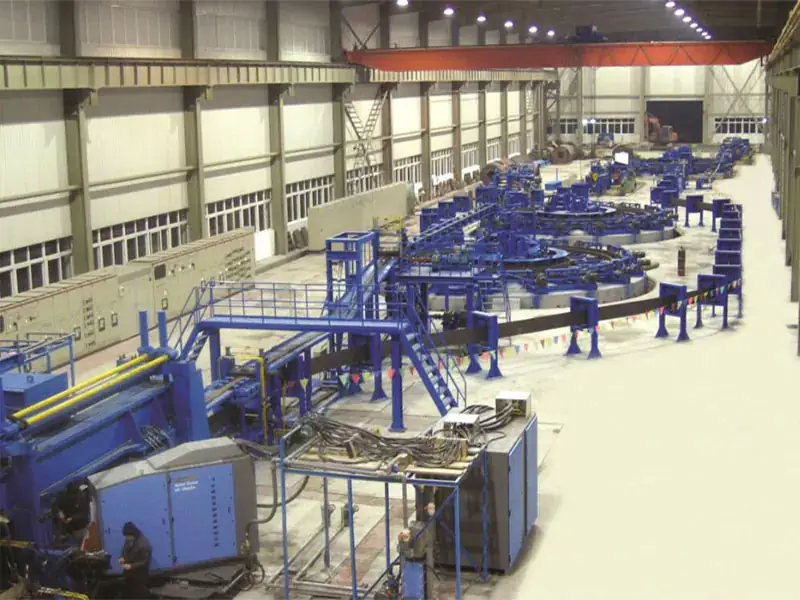
ERW (Electric Resistance Welding) High Frequency Pipe Welding Line is a comprehensive industrial set of equipment that continuously processes hot-rolled or cold-rolled steel coils into straight-seam welded pipes. A typical production process includes:
- Unwinding and editing. The steel coils are unwound and passed through correct devices to eliminate bending and internal stress.
- Forming - The strip steel is gradually rolled into an open tubular shape using several forming rolls.
- High frequency welding. The edges of the open tube blank are heated to forging temperature by high frequency current and then extruded by pressure rolls to form a continuous weld.
- Sizing and Straightening: Welded pipes are passed through sizing rolls to achieve final dimensional accuracy.
- Cutting. Continuous pipes are cut to a fixed length using a flying saw or flying shear.
The entire production line is highly automated. Modern factories integrate PLC control systems, online monitoring equipment and data logging functions to ensure full traceability of the entire production process.

Why High Frequency Welding Is Crucial to Pipe Quality
The welding method is a decisive factor in determining the quality of pipes. High frequency welding generates heat directly at the edges of the strip through resistance, creating a forged joint without filler metal. With optimized parameter settings, the weld strength can reach at least 93% of the base metal strength - this is the main reason why high-quality ERW pipes can replace seamless pipes in many demanding applications.
The weld areas should be free of lack of penetration, porosity, excessive burrs and other defects. Reputable manufacturers verify the integrity of welds using a variety of testing methods, including hydrostatic testing, ultrasonic testing, or eddy current testing.
Select a mill model based on the specifications of your target pipe
The starting point for choosing a mill is a fundamental question: what outside diameter of pipes are you going to produce?
The complete series of ERW pipe welding lines covers outer diameters from Φ10mm to Φ660mm and wall thicknesses from 0.5mm to 25.4mm. In this range, mills are classified according to the optimal diameter and wall thickness.
Precision small diameter pipe welding lines
For mass production of small diameter pipes requiring strict control of dimensional tolerances, the ERW32, ERW50 and ERW76 are the best choices:
| Model | Pipe range(mm) | Forming speed (m/min) | Wall thickness (mm) |
| ERW32 | Φ10–Φ32 | 100–150 | 0.5–3.0 |
| ERW50 | Φ20–Φ50 | 90–140 | 1.0–3.0 |
| ERW76 | Φ42–Φ76 | 80–120 | 1.0–3.75 |
Thesetube making machinesPrioritize speed and precision: Forming speed reaches 150m/min and outer diameter tolerance is controlled within ±0.03mm. They are ideal for the production of furniture tubes and automotive components, as well as for industries with stringent requirements for surface finish and dimensional consistency.
medium diameter pipe welding lines for general purposes
The ERW89 to ERW219 series covers the most common pipe sizes used in construction, utilities and general infrastructure:
Model Pipe range(mm) Forming speed (m/min) Wall thickness (mm) ERW89 Φ48–Φ89 70–110 1.5–4.0 ERW114 Φ50–Φ114 60–100 3.0–5.0 ERW165 Φ60–Φ165 50–80 3.0–6.0 ERW219 Φ114–Φ219 40–70 4.0–8.0
These models provide the optimal balance between performance and flexibility, and change sizes in just 30 minutes. This is a vital advantage for manufacturers processing orders with multiple specifications.
pipe welding lines for the production of large-diameter thick-walled pipes
The ERW273 to ERW660 series provide sufficient power and stability for large diameter thick wall applications such as oil and gas pipelines, structural steel columns and offshore platforms:
Model Pipe range(mm) Forming speed (m/min) Wall thickness (mm) ERW273 Φ165–Φ273 10–30 4.0–12.7 ERW325 Φ165–Φ325 8–25 4.0–14.0 ERW426 Φ219–Φ426 8–20 4.0–16.0 ERW508 Φ219–Φ508 8–20 4.0–20.0 ERW610 Φ219–Φ610 8–20 4.0–22.0 ERW630 Φ273–Φ630 6–20 6.0–25.4 ERW660 Φ273–Φ660 6–20 6.0–25.4
These large mills operate at lower forming speeds (6-30 m/min) to ensure complete weld penetration and dimensional stability of thick-walled materials—a necessary compromise for producing pipes that meet stringent standards such as API 5L.
Is faster molding speed always better?
No. This is one of the most common misconceptions when choosing equipment.
The forming speed must correspond to the pipe diameter, wall thickness, material grade and specific welding parameters. Leaving a mill outside the optimal speed range for a given product will result in defective welds, dimensional deviations and increased maintenance costs.
Clear fundamental rules apply:
- Small diameter thin wall pipes (≤Φ50mm, wall thickness ≤2mm): 80-150m/min for mass production
- Medium diameter pipes with medium walls (Φ50–Φ219 mm, wall thickness 2–8 mm): 40–110 m/min balancing productivity and welding quality
- Large-diameter thick-walled pipes (≥Φ219 mm, wall thickness ≥8 mm): 6–30 m/min to ensure complete weld penetration and stable dimensions.
Choose the speed that suits your product range, rather than just chasing the maximum speed specified in the specifications.
Key performance indicators to evaluate before purchasing
Beyond the basic measurement coverage, five key performance indicators distinguish the Chinese top tier.ERW pipe welding linesfrom conventional equipment.
Dimensional Accuracy: OD Tolerance
Accuracy is essential, especially for automotive, furniture, or API certified piping projects. High-performance mills provide:
- Outside diameter tolerance: ±0.1mm, calibrated in real time using online laser diameter gauges.
These tolerances meet or exceed ISO 9001 requirements and are required to produce pipes that meet stringent inspection standards including ASTM and API.
Weld strength factor
The weld strength factor—the ratio of the strength of the weld to the strength of the base metal—is the final indicator of weld quality. Leading manufacturers of ERW pipe welding lines provide a coefficient of ≥0.93, which means that the weld strength reaches a minimum of 93% of the base metal. This threshold allows ERW pipes to replace seamless pipes for numerous structures and pressure applications.
Power consumption per ton of steel
Energy efficiency directly impacts operating costs and carbon emissions. Modern plants equipped with solid-state high-frequency IGBT inverters consume 45–65 kWh per ton of finished steel, reducing energy consumption by 23% compared to traditional vacuum tube models. For an average plant with an annual production capacity of 100,000 tons, this single upgrade can save more than 2.8 million yuan in energy costs per year.
Efficiency of resizing
Changeover efficiency refers to the downtime required to switch production between different pipe sizes—a metric that is often underestimated by B2B buyers.
Conventional rolling mills require complete roll replacement with each size change, resulting in downtime of 8 hours or longer. Modern flexible molding systems use digital positioning technology; Operators simply enter parameters into the control console to automatically adjust roll gaps, reducing changeover time to less than 30 minutes and increasing efficiency by more than 90%.
This capability directly impacts production line utilization and overall profitability for manufacturers serving markets characterized by low-volume orders with multiple specifications, such as construction and municipal construction.
Compliance and Certificates: Items to be verified by suppliers
Compliance is not mandatory; this is a mandatory requirement for B2B pipe sales. Before you buy anyERW pipe welding line, make sure that the equipment (and its manufacturer) has the following certifications.
Mechanical Safety Standards
- CE 2006/42/EC – EU Machinery Directive, mandatory for equipment exported to the European Union.
- UL/CSA - North American Electrical Safety Certification.
These accreditations confirm that a plant's electrical systems, safety guards and emergency stop mechanisms meet internationally recognized safety standards.
Quality management system
ISO 9001:2015 certification confirms that a manufacturer maintains a documented quality management system covering design, production, inspection and after-sales service - a basic qualification that all reputable suppliers must have.
End product standards for target markets
The plant's production capacity must meet the standards required by your customers:
- API 5L – Standard for oil and gas pipeline pipes.
- ASTM A53/A36 - US standards for carbon steel and structural steel pipes.
- EN 10219 – European standard for structural hollow sections.
- JIS G3444 is a Japanese standard for general purpose welded carbon steel pipes.
- GB/T 3091 is a Chinese standard for welded pipes for municipal and general purposes.
If your target markets require API 5L or ASME B31.3 compliance, ensure the supplier has an appropriate project track record and supplies all necessary inspection equipment.
Test Standards
The plant's testing equipment must ensure compliance with:
- ASTM E570 - Standard Practice for Eddy Current Testing of Ferromagnetic Steel Pipe.
- API 1104 – Standard for welding of pipelines and related objects.
- ANSI/ASME B31.3 - Process Piping Standard
Integrated online eddy current testing, hydrostatic testing and ultrasonic testing are essential to verify weld integrity and achieve the defect-free production required by high-end customers.
Industrial Applications: Which mill model is right for your sector?
Different industries have different requirements for pipe quality, productivity and production flexibility. Below are guidelines for selecting a mill based on your end market.
Manufacture of furniture and automotive components
These industries require small diameter precision tubing with excellent surface finishes and tight tolerances. ERW32, ERW50 and ERW76 are the main options, offering forming speeds of 80-150m/min and OD tolerance of ±0.03mm - ideal for chair frames, automotive structural parts and fitness equipment.
Construction and municipal infrastructure
Construction and municipal projects typically require medium-diameter pipes covering a wide range of sizes, often in small batches. In this regard, the series from ERW89 to ERW219 are excellent. Their flexible molding systems enable rapid format changes with molding speeds of 40–110 m/min, balancing productivity and adapting to varied order requirements.
Oil, gas and structural steel
For energy and heavy construction work only the series ERW273 to ERW660 are suitable. These mills process wall thicknesses up to 25.4 mm and produce pipes that meet stringent API 5L, ASTM and other standards. The forming speed is deliberately limited to 6–30 m/min to ensure quality welding of thick-walled and high-strength materials.
Case Study: Municipal Water Pipeline Project
A large municipal water supply project required Φ114–Φ219 mm steel pipes with wall thicknesses of 4–8 mm with varying specifications and tight delivery schedules. Conventional seamless pipes required excessive costs and insufficient productivity, while pipe welding lines for the production of standard welded pipes could not cope with frequent size changes.
Solution
Install one ERW219 pipe welding line for flexible forming of medium-diameter pipes, equipped with:
- Digital roll-free forming system (changeover time 3 hours compared to industry average 8 hours)
- Online laser diameter measurement and eddy current testing
- Full compliance with municipal piping standards GB/T 3091
Project results
The annual capacity of the plant is 100,000 tons of 120,000 tons of pipes. Pipe costs were reduced by 22% compared to seamless alternatives, delivery cycles were cut in half, finished product yield reached 99.97% and no quality issues were reported at project acceptance.
How to Calculate ROI Before Investing in ERW Pipe Welding Line
Capital equipment purchases of this magnitude require a clear ROI analysis. Below is the calculation diagram using model ERW114 (Φ50-Φ114mm, speed 60-100m/min, annual design capacity 80000 tons) as an example.
Production capacity and cost of production
With an actual capacity utilization rate of 90%, the annual production volume reaches 90,000 tons. Based on the industry average gross profit of 80 yuan per ton of steel, the annual gross profit is 7.2 million yuan.
Saving energy and labor
- Energy: Electricity consumption per ton of steel has decreased by approximately 35 kWh compared to traditional mills. At an industrial electricity price of 0.6 yuan/kWh, the annual energy saving reaches 2.835 million yuan.
- Labor: Fully automated control reduces the need for 6 operator personnel compared to conventional lines. With an average annual salary of 80,000 yuan per employee, the annual labor savings is 480,000 yuan.
Reducing raw material waste
High-precision molding systems reduce raw material losses from the traditional 1.5% to 0.8%. With an annual production of 90,000 tons, 630 tons of steel coils are saved annually. With an average steel coil price of 4,000 yuan per ton, the annual raw material cost savings is 2.52 million yuan.
Expected payback period for static investments
Total hardware investment for this configuration: RMB 12 million. Total annual comprehensive income: 13.035 million yuan (gross profit + energy saving + labor saving + raw material saving). Static payback period: approximately 11.05 months - much better than the industry average of 2 years.
Note: Actual payback period will depend on local energy prices, labor costs, steel prices and gross profit per ton achievable in your target market. Consider this a calculation template, not a performance guarantee.
Step-by-Step Selection Checklist for B2B Buyers
Follow this structured workflow as you move from market research to vendor listing.
Step 1: Clarify your basic specification requirements
Documentation of key production requirements:
- Target range of pipe outer diameter and wall thickness
- Steel grades to be processed
- Target annual production (tons)
- Target industries and mandatory compliance standards (API 5L, ASTM, etc.)
Step 2: Shortlisted Candidate Stan Models
Use the full model selection table to filter out 2-3 mill models that fit your size range. Compare the following criteria:
- Does molding speed meet your productivity target?
- Installed power and footprint
- Cost of initial capital investment
Step 3: Verify supplier qualifications and project track record
Request and confirm supporting documents:
- ISO 9001:2015 and CE certificates
- Customer reviews of identical or similar mill models
- Actual production data from reference customers (capacity utilization, scrap rate, equipment utilization rate)
Step 4: Set up technical configuration
Collaborate with suppliers to finalize custom settings:
- Design of the forming area (location of rolls, number of forming stands)
- Welding system (rated power, frequency, cooling system)
- Control and testing complex (eddy current, ultrasonic, hydrostatic testing)
- Automation and production data recording system
Step 5: Calculate ROI
Apply the ROI framework described above with parameters specific to your site:
- Local electricity and labor costs
- Purchase prices for steel and expected scrap percentage
- Target gross profit per ton
- Financial costs (if applicable)
Frequently Asked Questions
Question 1:How to choose the right model of ERW pipe welding line depending on the pipe sizes?
A: Select the required outer diameter and wall thickness for the full range:
- Φ10–Φ76 mm, wall thickness 0.5–3.75 mm: ERW32/50/76 (small diameter precision mills, 80–150 m/min)
- Φ48–Φ219 mm, wall thickness 1.5–8 mm: ERW89/114/165/219 (medium diameter general purpose mills, 40–110 m/min)
- Φ165–Φ660 mm, wall thickness 4–25.4 mm: ERW273 to ERW660 (large diameter thick wall pipe mills, 6–30 m/min)
Question 2:Is faster molding speed always better?
A: Not necessarily. The speed must match the characteristics of your product. Thin-walled, small-diameter tubes can operate at speeds of 80–150 m/min; Heavy-wall, large-diameter pipe requires lower speeds (6-30 m/min) to ensure complete weld penetration and dimensional stability. Select a speed that is appropriate for your product range rather than the highest rated speed.
Question 3:Why is sizing efficiency important to B2B buyers?
A: Changeover efficiency measures the time and cost required to change pipe sizes, a key metric that evaluates a plant's production flexibility. Traditional mills require more than 8 hours of downtime to change rolls; Modern flexible molding systems reduce changeover times to less than 30 minutes. If your company serves markets with low-volume orders of various specifications (construction, municipal, general processing), this capability has a direct impact on capacity utilization and overall profitability.
Question 4:How to check the quality of a weld for compliance with current standards?
A: Checking the quality of the weld requires a combined test regime:
- Visual inspection: Uniform weld without pores or cracks, weld reinforcement controlled within 0.5–1.5 mm
- Mechanical performance tests: Tensile strength and yield strength meet the requirements of the base metal, weld strength coefficient ≥0.93
- Non-destructive testing: Eddy current testing (ASTM E570) or ultrasonic testing
- Hydrostatic test: Under pressure 1.5 times design pressure without leakage or deformation under holding pressure.
Question 5:What is the typical payback period for an ERW pipe welding line?
A: The industry average ranges from 1 to 3 years. Highly efficient flexible forming mills can provide a payback period of 8–12 months under favorable operating conditions. Key influencing variables include capacity utilization, energy and labor costs, raw material yield and gross margin per ton of finished pipe.
Conclusion: Choose the right ERW pipe welding line manufacturer
PurchaseERW pipe welding lineis not a commodity transaction. A well-selected plant, sized to suit your product range, equipped with the necessary automation and control systems, and supported by a certified manufacturer, will act as a profit center, delivering consistent profits for decades to come. An unsuitable plant will become a maintenance burden, a source of quality risks and a competitive disadvantage.
Use the concepts described in this guide to evaluate technical specifications, verify compliance with standards, and calculate ROI, and ask targeted questions of each shortlisted supplier. The initial cost of due diligence is negligible compared to the financial losses incurred due to improper investment in equipment.
Whether you require custom model selection frameworks, technical configuration optimization, or detailed ROI forecasts tailored to your unique production requirements, contact our technical team for professional one-on-one consulting services.