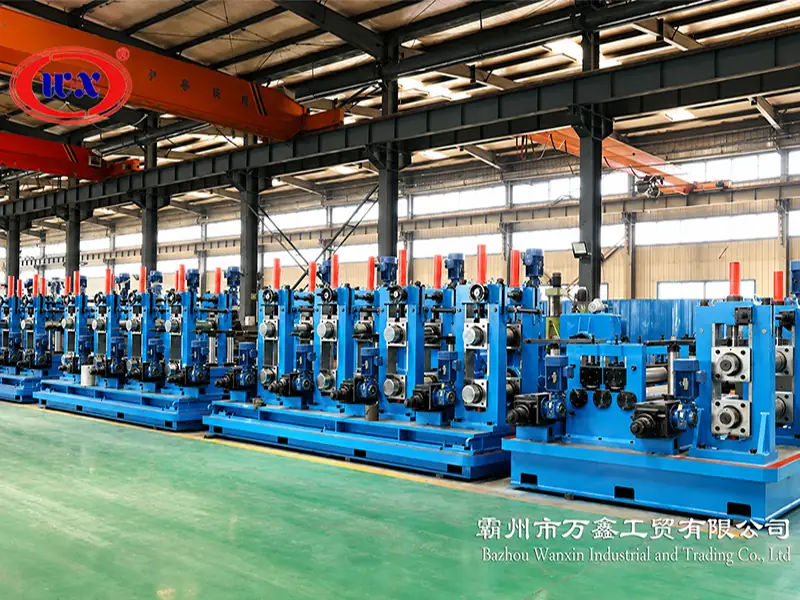
Introduction
Efficient weld formation is essential for consistent production of ERW pipes. Inconsistent heat, poor edge welding, or inconsistent welding parameters can affect weld integrity, dimensional accuracy, and production continuity, increasing both production costs and quality risks.
High frequency welding solves these problems by rapidly heating the edges of the strip with concentrated electrical energy before they are welded together under controlled pressure. This process provides continuous production, consistent weld quality and high production efficiency, making it the standard welding technology used in modern technology.ERW pipe welding lines.
What is high frequency welding?
High frequency welding is a resistance welding process used to produce longitudinal steel pipes. During the production process, the cut steel strip is gradually formed into an open pipe. As the edges of the strip approach each other, a high-frequency electric current generates heat at the edges, allowing them to reach the plastic's welding temperature. The heated edges are then compressed by pressure rolls, creating a continuous weld without the need for filler metal.
Because heat is generated primarily at the edges of the strip, high-frequency welding allows for efficient use of energy while limiting heat input into the surrounding material. This promotes uniform weld formation and supports continuous production in today's environment.pipe welding lines for high frequency pipe welding.
How high frequency welding works
The heating mechanism in high-frequency welding is based on two well-known electromagnetic principles.
The skin effect causes high-frequency current to flow predominantly along the surface of the steel rather than across its entire cross-section. At the same time, the proximity effect concentrates the current at adjacent strip edges as they move toward the welding point.
This localized current distribution quickly heats the edges of the strip to the required forging temperature. Once the required temperature is reached, the pressure roll system applies controlled pressure to seal the edges into a tight longitudinal weld.
Because no filler metal is introduced during welding, the process remains clean, efficient and suitable for continuous automated production.
Induction welding vs. Resistance welding
Modernpipe welding machines Usually induction or resistance welding is used.
In induction welding, high frequency current is transmitted through electromagnetic induction without direct contact between the power source and the workpiece. This method ensures stable energy transfer and is widely used for automated production.
In resistance welding, electrical contacts transmit high frequency current directly to the edges of the strip. Depending on production requirements and pipe characteristics, manufacturers can switch between induction and resistance welding to suit different welding processes and product sizes.
How high frequency welding is suitable for ERW pipe welding line
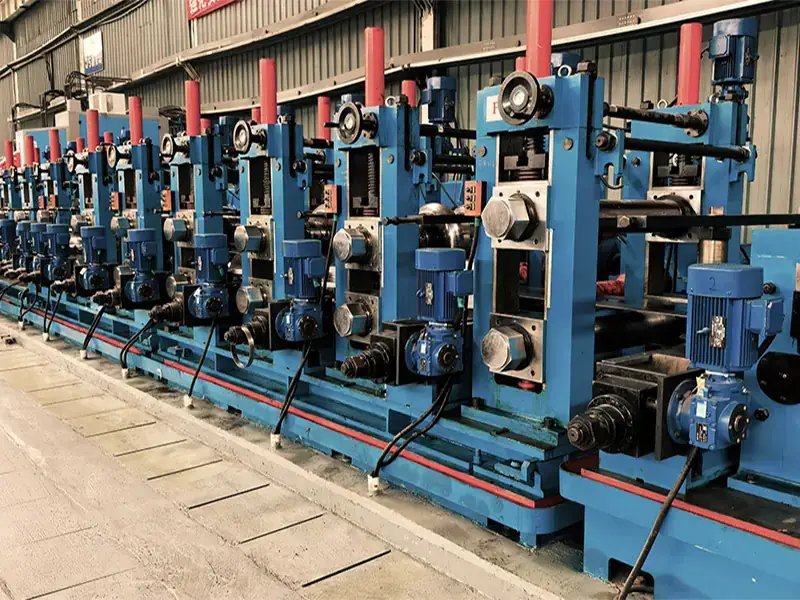
DuringERW pipe making machineHigh frequency welding is a step in a continuous manufacturing process that transforms cut coils of steel into finished welded pipes.
From coiled steel to finished ERW pipe
A typical production sequence includes:
- Loading a roll
- Formation
- High frequency welding
- Removing the Weld
- Pipe sizes
- Quality check
- cutting
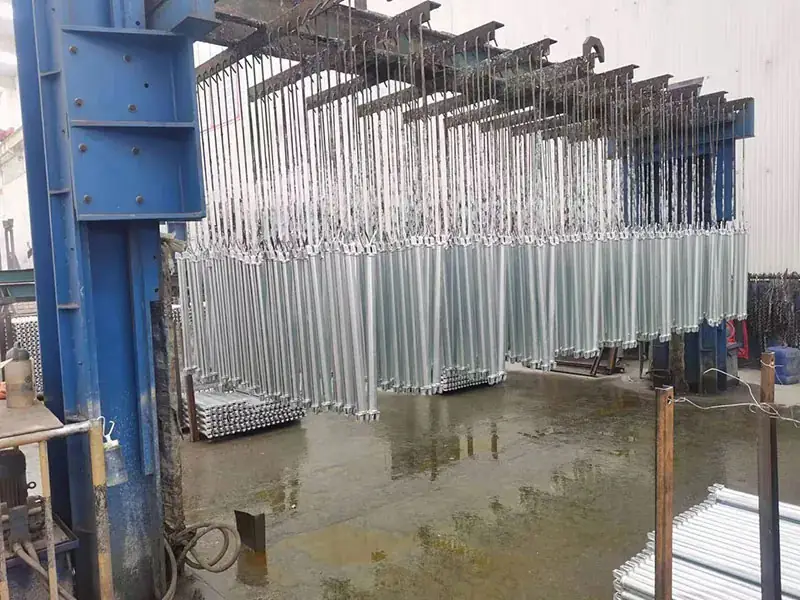
- Storage of finished pipes
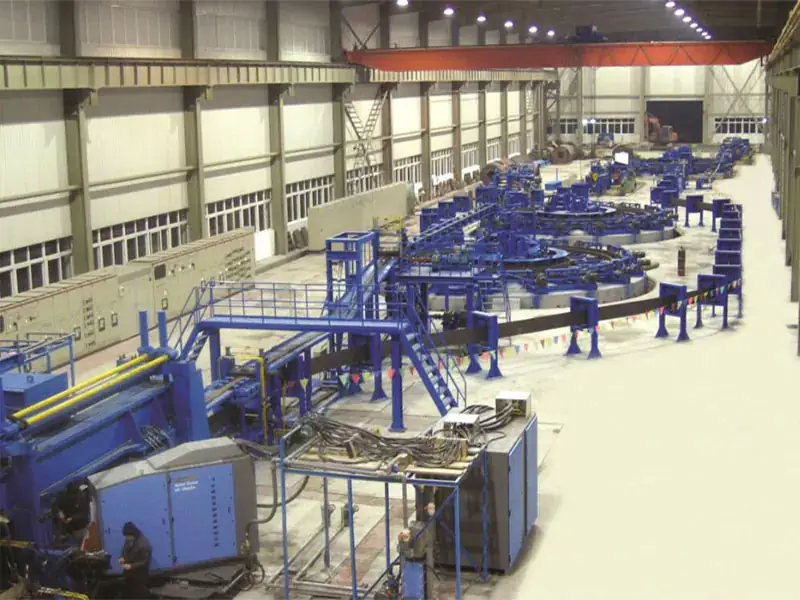
Because each process is integrated into one automated production line, material handling is reduced and production remains continuous from coil feeding to finished tube collection.

Main equipment used in the welding area
Consistent welding performance depends on the coordinated operation of several key components.
High frequency welder
The high frequency welding machine uses AC-DC-AC conversion structure with power configurations ranging from 150kW to more than 1000kW. Three-phase AC power is first converted to DC and then inverted to high frequency AC using MOSFET based technology before being supplied to the welding load.
The system uses fixed angle phase locking control technology to maintain stable operation of the inverter under optimal quasi-resonant operating conditions. Combined with automatic electronic load matching, this ensures reliable performance under a variety of welding conditions.
Impeder
The impeder is installed inside the pipe during welding. By concentrating high-frequency current at the edges of the strip, it reduces current loss inside the pipe body and improves heating efficiency.
Modern impeders typically use high permeability ferrite cores along with copper windings and stainless steel housings. Larger models typically use closed-loop water cooling to maintain stable performance during continuous production.
Compression roll system
Once the edges are heated, the pressure roller system applies controlled pressure to seal the heated edges.
The multi-roll design ensures precise positioning, and hydraulic or servo-controlled pressure control optimizes welding force for different pipe sizes and wall thicknesses. Proper compression pressure promotes weld integrity, helping to maintain pipe roundness and dimensional accuracy.
Bead removal system
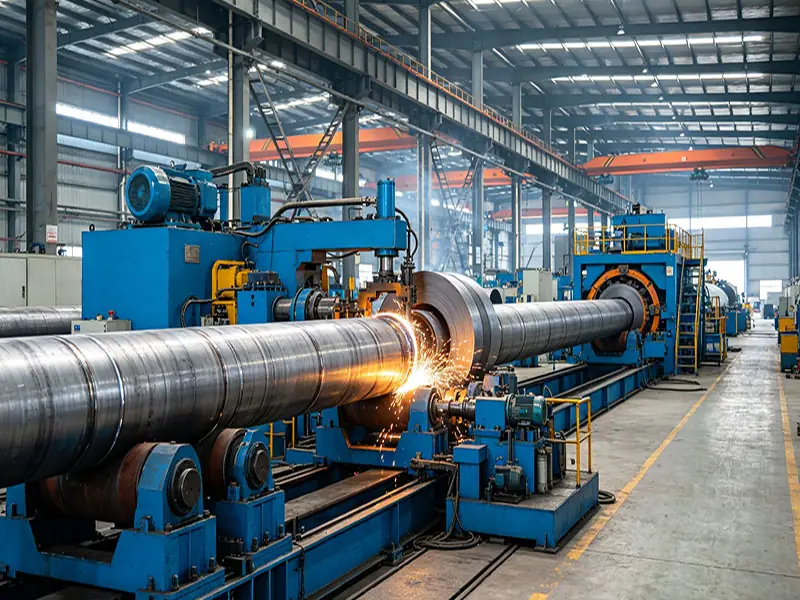
The welding process creates both internal and external welds that must be removed before further processing.
External beads are removed using carbide cutting tools, and special internal bead removers eliminate the protrusions of internal welds. Automated bead removal systems synchronize with welding speed, allowing welds to be removed online without stopping production. Some systems also include automatic tool changing and tool wear monitoring to improve operational efficiency.
The main advantages of high frequency welding on ERW pipe welding lines
Higher production speed with less energy consumption
Production speeds depend on pipe diameter and wall thickness and typically range from 10 m/min to 60 m/min, with maximum speeds exceeding 100 m/min for suitable applications.
The use of semiconductor high-frequency power supplies also improves energy efficiency. Compared with traditional vacuum tube welding equipment, energy consumption can be reduced by 30% or more, and the overall efficiency of the equipment reaches 85% or higher.
Consistent weld strength and surface quality
Consistent edge heating and precisely controlled compression pressure result in a smooth, tight longitudinal weld.
To further verify the integrity of the weld, intermediate annealing and ultrasonic testing can be included in the production process. Together with rapid weld removal, these processes help improve weld reliability and surface quality.
Greater automation and lower operating costs
ModernERW pipe welding lines integrate automation of the entire production process, from loading coils to storing finished pipes.
Integrated control systems reduce manual intervention and at the same time increase production stability. Automated control also reduces manual control requirements and ensures stable production over long periods of operation.
Quality control throughout the entire welding process
Stable welding parameters alone are not enough to guarantee the quality of the finished pipes. Modern production lines include a variety of control and monitoring techniques to verify the integrity of welds throughout production.
Online process monitoring
During production, key process parameters are constantly monitored, including:
- Welding current
- Welding voltage
- Welding temperature
- Compression pressure
- Steel strip speed
Real-time monitoring allows operators to quickly identify process deviations. If abnormal conditions are detected, the system can raise an alarm or stop production before defective products continue to operate.
Non-destructive testing methods
Several inspection methods are used to evaluate the quality of the weld without damaging the finished pipe.
Ultrasonic testing (UT) detects internal discontinuities, such as cracks, inclusions and lack of fusion, which cannot be detected by visual inspection alone.
Hydrostatic tests applies internal pressure to check seal effectiveness while checking for leakage or deformation.
Many production lines also include eddy current testing and online weld inspection to provide comprehensive inspection of weld quality throughout the entire production process.
How to Prevent Common Welding Defects
Maintaining consistent weld quality requires proper control of welding parameters, equipment settings, and material conditions. Common welding defects can be reduced by the following measures:
Weld cracking: Optimize welding temperature and compression pressure to ensure uniform heating of strip edges and sufficient weld penetration during the welding process.
Incomplete merge: Remove oxide layers and contaminants from strip edges and adjust welding speed and heating power correctly to achieve complete edge bonding.
Dimensional deviation: Regularly calibrate pinch and guide rolls while maintaining accurate strip alignment to improve pipe dimensional accuracy.
Excessive porosity and slag inclusions: Keep strip surfaces clean and maintain stable welding conditions to reduce contamination and improve weld stability.
Why choose modern high frequency welding pipe welding line?
Choosing the right onehigh frequency pipe welding line involves more than just choosing the right pipe size. Equipment design, automation capabilities, production flexibility and operational reliability all impact long-term production performance.
Advanced HF welding system
Modern high frequency welding systems combine MOSFET based inverter technology with fixed angle phase control and automatic electronic load matching. This combination provides efficient energy conversion, stable welding power and reliable operation in a variety of production environments.
The modular design of the equipment also simplifies maintenance and allows for flexible capacity expansion to suit different production capacities.
Wide range of products
Modern production lines support a wide range of product specifications.
Depending on the production line configuration, manufacturers can produce square and rectangular tubes up to 200mm×200mm in size, along with corresponding round tube sizes and wall thicknesses of 16mm or more, allowing a single production line to meet multiple application requirements.
Built for high performance and reliability
Robust machine designs, rugged rolling components and built-in automation help maintain consistent performance in continuous production environments.
Closed-loop water cooling ensures reliable operation of key welding components during busy production, while the equipment's modular design simplifies routine maintenance and helps reduce long-term operating costs.
Typical Applications for HF Welded Pipe
HF welded pipes are widely used in many industries because they combine reliable welding quality and efficient large-scale production.
Construction and structural pipes
ERW structural pipes are used in a wide range of construction projects, including commercial buildings, industrial plants and bridges, where consistent product quality is important.
Transportation of oil, gas and liquids
Welded ERW pipes are also used in pipelines transporting oil, natural gas, water and other liquids. Consistent weld integrity and comprehensive quality control help maintain reliable pipeline operation.
Automotive, mechanical engineering and infrastructure
Manufacturers also produce welded pipes for mechanical equipment, automotive components, shipbuilding, energy facilities and other infrastructure projects that require consistent dimensional accuracy and reliable product quality.
Frequently Asked Questions
Question 1:What are the advantages of solid state high frequency welding over traditional welding systems?
A: Solid state high frequency welding provides higher welding efficiency, lower power consumption and more stable welding quality. Its compact, modular design also simplifies maintenance and supports a variety of pipe specifications while reducing long-term operating costs.
Question 2:How can excessive weld beads be reduced in high frequency welding?
A: First check whether the pressure and alignment of the pinch rolls are adjusted correctly according to the pipe specifications. Next, ensure that the welding power matches production speed and check the bead removal system to ensure that the cutting tools are installed correctly and in good condition.
Question 3:How should the cooling system be maintained?
A: Regularly check the cooling water quality and flow rate to ensure stable circulation. Monitor inlet and outlet water temperatures during operation and clean cooling lines while inspecting the pump and heat exchanger to maintain reliable cooling performance.
Conclusion
From weld formation and process control to final quality control, every step of high frequency welding contributes to overall plant productivity.ERW pipe welding line. Understanding these technologies helps manufacturers more effectively evaluate equipment and create production lines that provide reliable quality, consistent performance, and long-term productivity.
If you are looking ERW pipe making machine Combining advanced high frequency welding technology, automated manufacturing and reliable performance, our team of engineers is ready to help you find the right solution for your production requirements.